Marble-Inspired Metallics
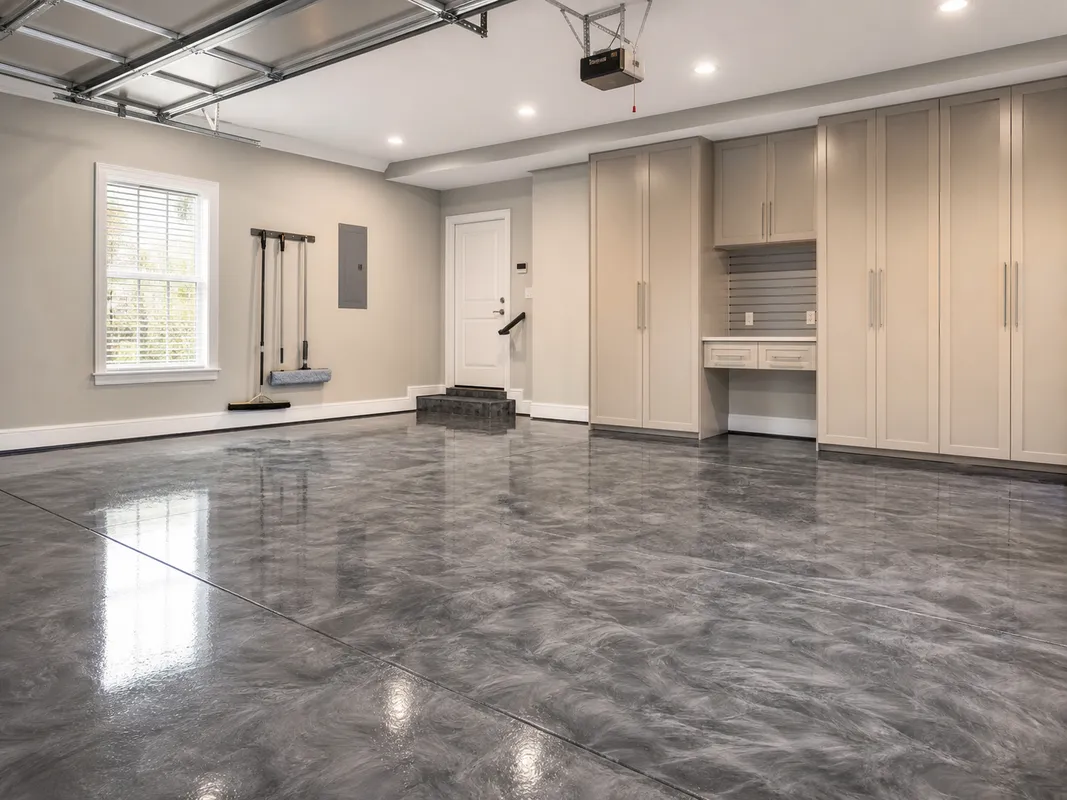
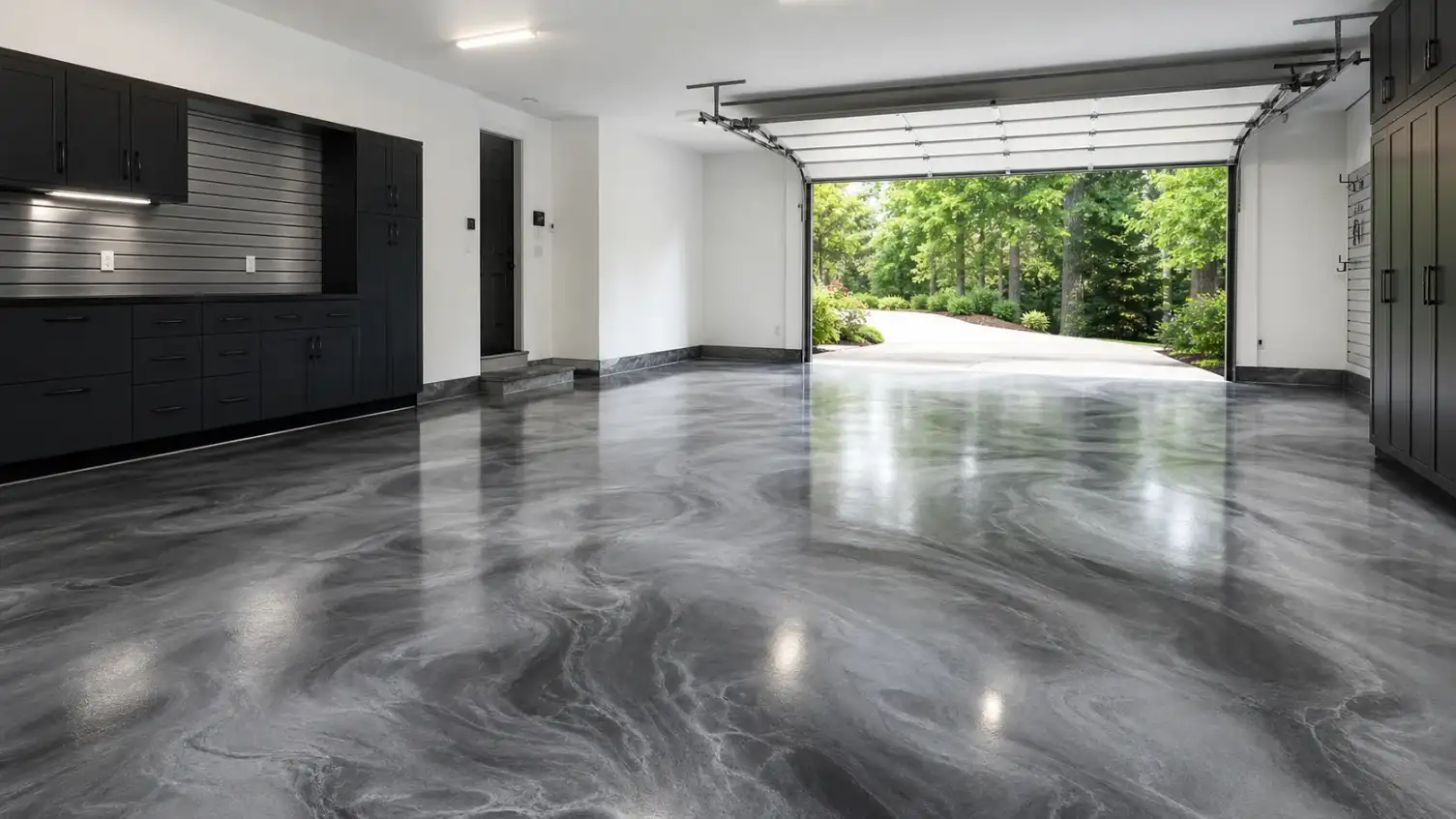
Marble-style floors use lighter bases and controlled veining for a polished, high-end look.
- White and silver marble
- Pearl and charcoal movement
- Soft gray veining
- Champagne and cream blend
The Design System
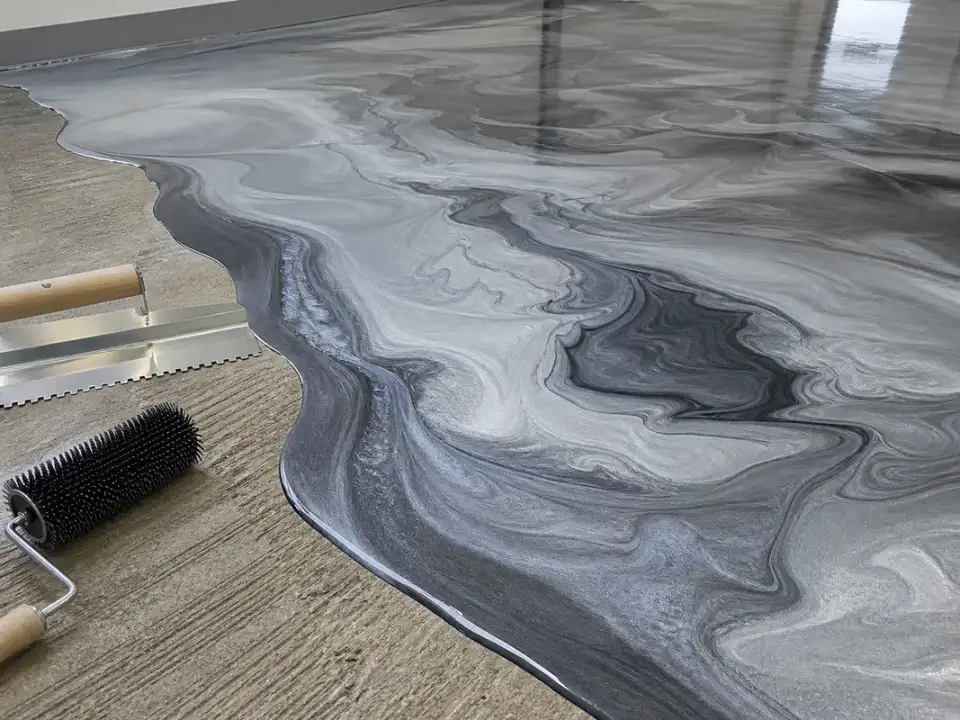
Metallic epoxy flooring uses metallic pigments suspended in a resin system to create movement, depth, and a one-of-a-kind finish. The look can resemble polished stone, flowing metal, smoke, marble, or abstract color movement depending on the pigment blend and installer technique.
The process starts with concrete preparation because the coating needs a clean, profiled surface to bond. From there, the metallic layer is placed and manipulated while wet, then protected with a durable clear topcoat selected for the space.
Metallic Looks
Metallic floors are custom by nature, but good design still needs boundaries. Color, movement, room size, lighting, and traffic all affect the final result.
Marble-style floors use lighter bases and controlled veining for a polished, high-end look.
Darker metallics work well in garages, studios, and specialty spaces that need a dramatic floor without a busy pattern.
Warm finishes can pair with wood tones, darker cabinetry, and warm exterior palettes.
High-contrast designs create the strongest visual impact, but they also show more movement and variation. These are best for clients who want a bold floor.
Mauricio Blanco can explain what metallic epoxy can and cannot control. Pigment movement is part of the look, so the goal is a guided design direction rather than a printed pattern.
Layered Finish
Metallic epoxy depends on layers. The base color, pigment choice, movement technique, lighting, and topcoat all change how the floor reads in the finished space.
Grinding and surface preparation create the profile needed for adhesion. Cracks, moisture concerns, oil contamination, and old coatings must be addressed before the decorative layer goes down.
The base color sets the background for the metallic effect. Dark bases produce deeper contrast, while light bases create a cleaner marble-like result.
Metallic pigments are moved through the wet resin to create depth. This movement cannot be duplicated exactly from one floor to another, which is part of the appeal and also a design limitation.
The topcoat protects the decorative layer from routine use and helps set the final sheen. In some spaces, a polyaspartic topcoat may be recommended for durability and turnaround.
Metallic floors are often smoother and glossier than flake systems. For wet or high-slip-risk spaces, Garage Glow will discuss whether a different system or texture level is the better fit.
Where It Works
Metallic epoxy works best when appearance is a priority and the space is a good fit for a glossy decorative floor.
A metallic garage floor creates a stronger design statement than standard flake coating. It suits homeowners who want the garage to feel more like a showroom, hobby space, or clean extension of the home.
Interior concrete spaces can benefit from the depth and reflectivity of metallic epoxy. Moisture conditions must be reviewed first, especially in basements after humid or rainy periods.
Gyms, studios, and hobby rooms often need a floor that looks polished and cleans easily. Equipment pads or mats may still be needed under heavy weights or sharp contact points.
Metallic epoxy can support a branded, high-visual-impact environment for small showrooms and specialty retail spaces. Cure timing, traffic schedule, and maintenance expectations should be discussed before installation.
A metallic floor can give an office, salon, studio, or display room a custom look. The design should be matched to lighting, wall color, and expected foot traffic.
| Feature | Metallic Epoxy | Flake Coating | Polished Concrete |
|---|---|---|---|
| Visual Style | Custom marble-like movement | Speckled, practical, hides debris | Natural concrete sheen |
| Price | Custom pricing available | Varies by concrete and scope | |
| Design Control | Guided, not exact duplication | More predictable | Depends on existing slab |
| Slip Considerations | Often smoother and glossier | Texture can be more practical | Can be slick when wet |
| Best Fit | Decorative interior or showcase spaces | Garages and utility areas | Commercial or modern interiors |
Metallic epoxy wins on visual depth and custom design. Flake systems are usually more practical for heavy utility use, while polished concrete depends heavily on the condition of the existing slab.
Long-Term Care
Metallic epoxy is easier to maintain when the floor is treated like a finished surface, not bare concrete. Cleaning is simple, but abrasive damage should be avoided.
Use a dust mop, soft broom, or non-abrasive vacuum attachment to remove grit. Small particles can dull the sheen over time if they are dragged across the floor.
Use a neutral cleaner and water for routine cleaning. Avoid harsh solvents, acidic products, and abrasive pads unless the coating manufacturer specifically allows them.
Use pads under furniture, toolboxes, gym equipment, and anything with sharp feet. Heavy point loads can scratch or mark the finish even when the coating system is durable.
Garages and showrooms may see tire marks, cleaners, or automotive fluids. Clean spills quickly and ask Garage Glow for product-specific care guidance after installation.
A glossy floor will show dust, footprints, and scratches more readily than a textured flake floor. That is part of the tradeoff for the high-end metallic look.
The Garage Glow Difference
Metallic epoxy is as much about installer judgment as product choice. Poor prep, rushed pigment movement, or unrealistic design promises can lead to disappointment.
Garage Glow starts with surface preparation and substrate review. Mauricio Blanco looks at cracks, contamination, moisture, previous coatings, and surface profile before the decorative work begins.
Metallic floors are custom, not printed. Garage Glow explains how colors, pigment movement, lighting, and room size affect the final appearance so expectations are clear before installation.
Commercial-grade materials are used to create a durable, clean finish. Manufacturer-backed product warranty may apply where applicable, depending on the system, substrate, and installation requirements.
Custom pricing is available for metallic coatings. Final cost depends on square footage, prep requirements, design complexity, topcoat selection, and site conditions.
Garage Glow offers custom pricing for metallic coatings. The final price depends on the size of the space, concrete condition, prep needs, design complexity, and topcoat selection. A site review is needed before a firm estimate.
No. Metallic epoxy can follow a design direction, color palette, and movement style, but it cannot duplicate a photo exactly. The pigments move through the resin during installation, so every finished floor is unique.
It can be, but expectations matter. Metallic epoxy is more decorative and typically glossier than a flake garage floor. If the garage sees heavy tools, wet traffic, or rough use, Garage Glow may recommend a more practical texture or coating system.
Timing depends on square footage, preparation, coating system, humidity, and cure requirements. Many coating systems can be completed faster than traditional flooring, but metallic floors need enough working time for the decorative layer and protective topcoat.
Atlanta humidity can affect scheduling, substrate evaluation, and cure timing. Garage Glow reviews moisture conditions before installation and will not treat every slab the same just because the finish color is similar.
A 15-year warranty may apply where applicable, and manufacturer-backed product warranty may apply depending on the selected system and conditions. Workmanship warranty details are provided in the estimate so the coverage is clear.
© 2026 Garage Glow LLC. All rights reserved. | Premium Concrete Coatings in Atlanta, GA