Tire and Rolling Load Requirements
Aircraft tires, maintenance carts, and rolling equipment should be discussed during estimating.
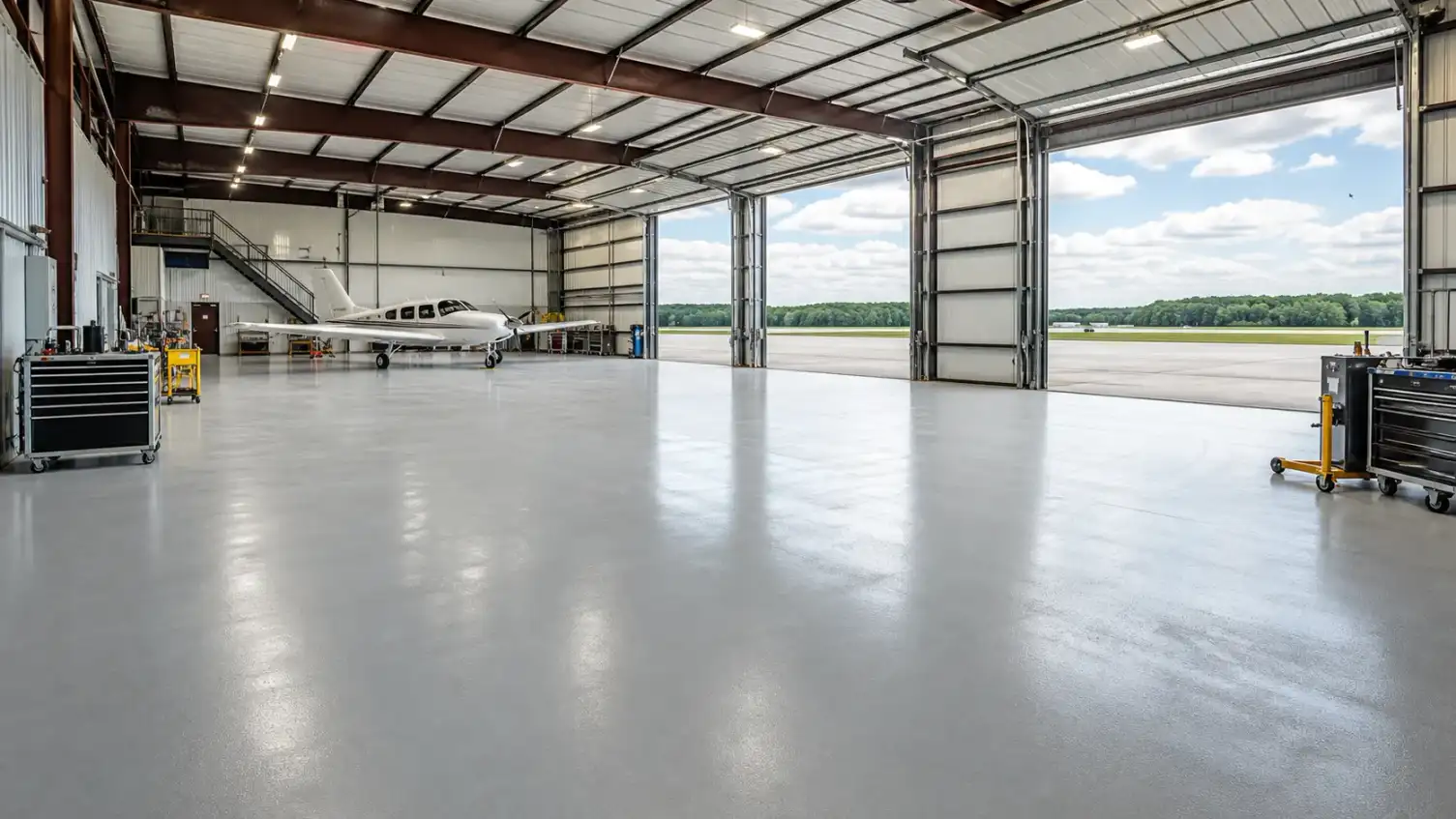
Airplane hangar epoxy flooring is a coated concrete system designed for aircraft storage, maintenance support, and clean working conditions. A good hangar floor helps reflect light, show dropped hardware, reduce concrete dust, and withstand rolling equipment.
Garage Glow prepares the slab mechanically, then installs a layered system based on aircraft size, tire loads, tools, jacks, carts, and fluid exposure. The specification should be confirmed around the actual use of the hangar, not only the square footage.
Aircraft spaces are not ordinary garages. Tire contact, parked loads, sunlight at open doors, tool drops, and fluid exposure all affect the floor system.
Aircraft tires, maintenance carts, and rolling equipment should be discussed during estimating.
Oil, hydraulic fluid, fuel residue, cleaners, and solvents may be present. Product selection should be based on the exposure list for the facility.
Light gray or high-reflectance finishes make it easier to see tools, leaks, and debris. This matters when work happens under wings or around landing gear.
Topcoat selection helps manage abrasion and incidental impact. No coating is indestructible, so expectations should be matched to maintenance activity.
Walk paths, equipment zones, and aircraft parking marks can be planned into the floor layout.
Hangar floors often favor clean, bright finishes over decorative complexity. The system still needs a layered build that bonds well and protects the surface.
The base coat adheres to the prepared concrete and sets the foundation for the system. Moisture, slab age, and contamination should be checked before coating.
Solid colors create a clean aviation look and make leaks easier to spot. Light flake can hide minor dirt while keeping the hangar bright.
The topcoat is selected for abrasion, tires, rolling equipment, and fluid exposure. Warranty details are confirmed with each estimate because aviation use can vary widely.
Color bands or striping can mark equipment areas, walk paths, or parking boundaries. These details should be finalized before installation begins.
Private hangars benefit from a clean, reflective floor that keeps dust down and presents the aircraft well. Tire contact and door exposure should be reviewed.
Maintenance spaces need fluid resistance, visibility, and durability around tool carts and jacks. The coating system should reflect the type of work performed.
Parts storage, compressor rooms, and support areas need dust control and cleanability. A coated floor helps keep equipment areas more organized.
Open-door areas see sunlight, water, tire traffic, and debris. These zones may need added attention during prep and topcoat selection.
Display hangars need a floor that looks professional and stays easy to clean around visitors, carts, and staged aircraft.
| Factor | Hangar Epoxy | Bare Concrete | Basic Floor Paint |
|---|---|---|---|
| Light reflection | Strong with bright colors | Low | Moderate at first |
| Dust control | High | Poor | Limited |
| Fluid resistance | System-dependent | Stains and absorbs | Often weak |
| Rolling equipment | Spec-driven | Concrete wears | Paint may peel |
Paint can look acceptable for a short time, but hangar traffic exposes weak bonding quickly. A prepared epoxy system is a better fit for aircraft spaces that need clean operation.
Hangar epoxy maintenance focuses on keeping grit, fluids, and sharp impacts from shortening the floor's life.
Sweep or auto-scrub regularly so grit does not abrade the topcoat. Door tracks and entry areas often collect the most debris.
Clean oils, hydraulic fluids, fuel residue, and solvents promptly. Provide the expected fluid list before installation so resistance can be reviewed.
Long-term parked loads and jacking should be handled according to the final system recommendations. Pads may be appropriate for some equipment.
Dropped tools can damage coatings. Mats or work pads may be helpful in repeated maintenance zones.
Inspect door zones, tire paths, and maintenance areas for wear. Early correction is easier than waiting until coating damage spreads.
A hangar floor has to be specified around aircraft use, not a generic garage coating. Garage Glow keeps the estimate focused on loads, fluids, visibility, and schedule.
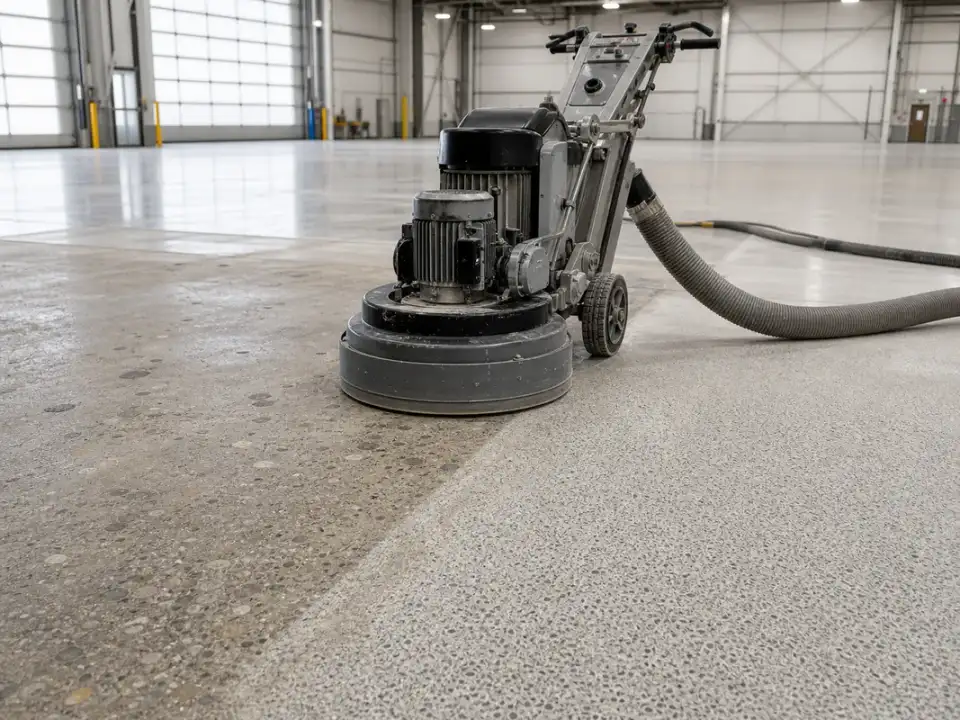
Mechanical preparation helps the coating bond to the concrete. Existing sealers, oil contamination, or weak surface concrete must be addressed before the system is installed.
Garage Glow uses commercial-grade coating materials matched to the environment. Aviation exposures should be documented so the system is selected with realistic performance expectations.
Hangars may need aircraft moved, equipment staged, and cure windows protected. Garage Glow discusses those logistics before work begins.
Mauricio Blanco leads Garage Glow's customer communication, keeping hangar access, aircraft movement, coating scope, and cure timing clear from estimate through follow-up.
It can be specified for aircraft tire contact, but aircraft type and load details matter. The estimate should include aircraft weight, parking pattern, tire type, and whether jacks or dollies are used.
Resistance depends on the coating system and the fluid. Oil, hydraulic fluid, fuel residue, solvents, and cleaners should be listed before product selection. Prompt spill cleanup still matters even with a resistant topcoat.
Light gray and other bright colors are common because they improve visibility and make leaks easier to spot. Flake can hide dirt, but heavy decorative blends may make small hardware harder to see.
Yes, layout markings can often be planned into the coating project. The final approach depends on the system and facility requirements.
Timing depends on square footage, slab condition, prep, system type, and cure requirements. Aircraft and equipment usually need to be moved before work starts. Garage Glow will outline the schedule during estimating.
Warranty terms are confirmed with each estimate because hangar environments vary by aircraft, maintenance activity, and fluid exposure. Some systems may include longer warranty options where applicable, but the exact terms must match the project.
© 2026 Garage Glow LLC. All rights reserved. | Premium Concrete Coatings in Atlanta, GA