Grease and Hot Water Resistance
Grease and hot water can punish ordinary coatings. Garage Glow reviews the kitchen use, cleaning process, and expected exposures before recommending a system.
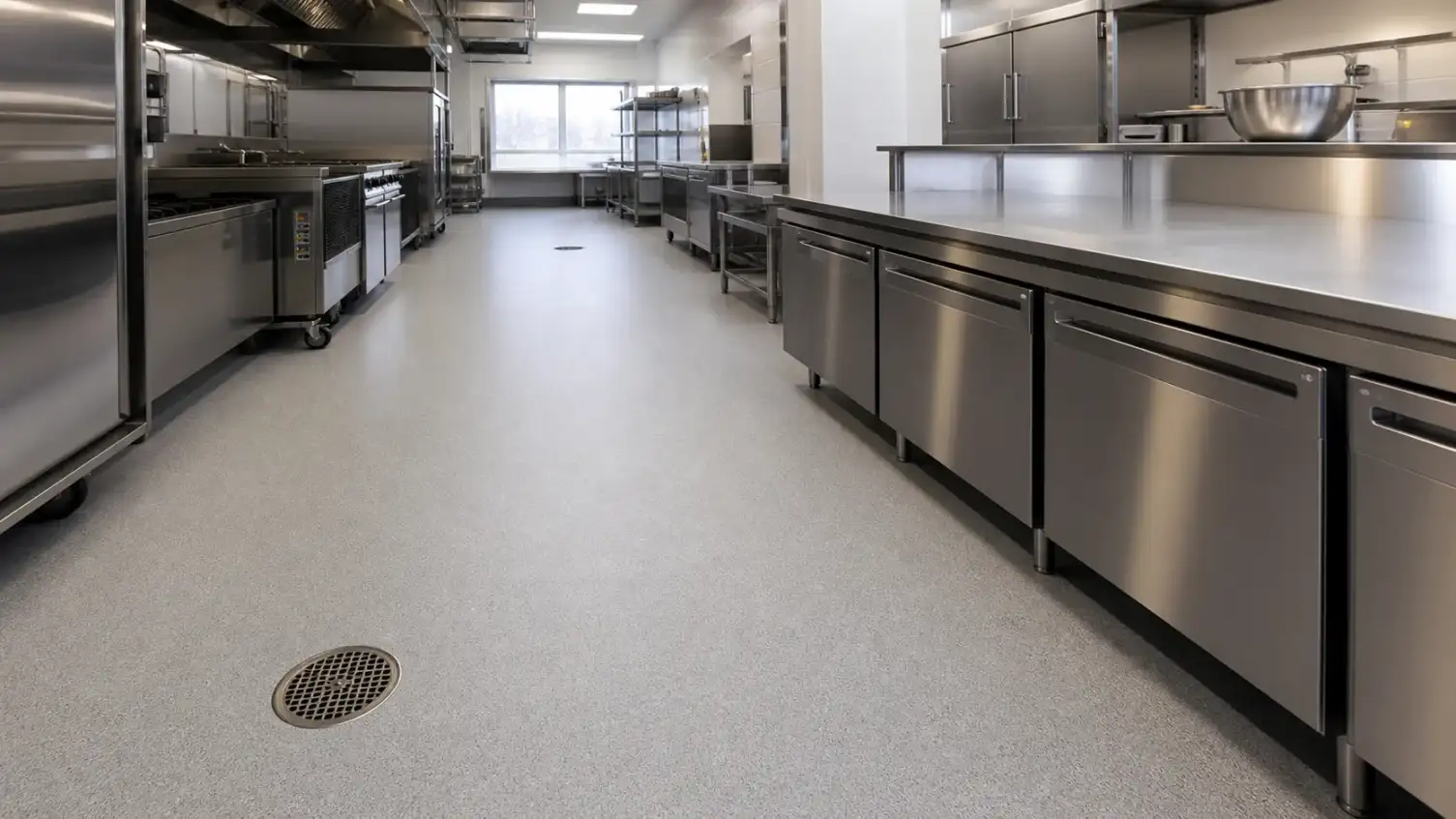
Commercial kitchen epoxy flooring is a coated concrete system designed for food-service work areas where moisture, grease, and sanitation routines are part of every shift. The system should create a durable, cleanable surface while reducing weak points where residue can collect.
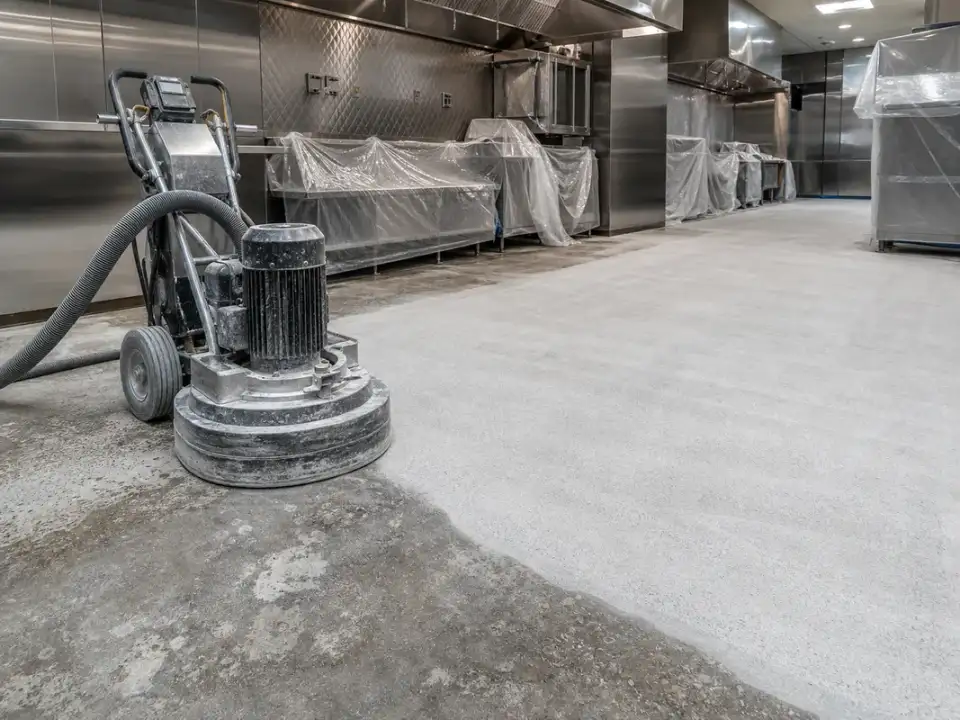
Garage Glow starts with mechanical surface preparation, then selects the coating layers around the kitchen layout. Prep lines, dish rooms, walk-in access, dry storage, and mop areas may require different traction levels or wall-base details.
A kitchen floor has to work during a dinner rush and during closing cleanup. The coating system should reflect grease exposure, water temperature, drain locations, and inspection requirements.
Grease and hot water can punish ordinary coatings. Garage Glow reviews the kitchen use, cleaning process, and expected exposures before recommending a system.
Texture should improve traction around dish areas, cook lines, and walk-in entries without creating a floor that traps grime. The profile needs to work with the cleaning routine.
Food-service spaces often need cleanable transitions at the wall.
Floor slope and drain placement affect both safety and coating life. Areas that hold water need to be identified before installation.
Kitchen downtime is expensive. Garage Glow reviews operating hours, equipment movement, cure windows, and reopening needs during the estimate.
The finish system should make debris visible, tolerate cleaning, and provide traction. The correct build depends on room type and the kitchen's daily workflow.
The base coat bonds to prepared concrete and creates the foundation for the finished system. Contamination from grease or old coatings must be addressed during prep.
Quartz or traction aggregate is often considered for wet food-service areas because it can add grip and durability. The broadcast level should be matched to safety and cleanability.
The topcoat faces hot water, degreasers, foot traffic, and cart movement. Product compatibility should be reviewed against the kitchen's cleaning chemicals.
Neutral gray, tan, or quartz blends can make spills and food debris easier to see. Color zoning may help define prep, wash, storage, or traffic areas.
Cook lines need traction and resistance to grease tracked by staff. The floor should clean without leaving slick residue behind.
Dish areas see hot water, detergents, and constant wet traffic. Texture, slope, and drain details matter here more than appearance.
Prep rooms benefit from a cleanable floor that shows debris and supports frequent sanitation. Cove/base details may be relevant near walls and equipment.
Condensation, cart traffic, and temperature changes make walk-in entries hard on floors. These areas should be reviewed carefully during the estimate.
Storage rooms and corridors need dust control, cart durability, and a finish that can be cleaned quickly at closing.
| Factor | Kitchen Epoxy | Bare Concrete | Tile |
|---|---|---|---|
| Cleanability | High when properly specified | Poor | Good surface, grout vulnerable |
| Slip planning | Adjustable texture | Limited | Tile-specific |
| Grease resistance | System-dependent | Stains easily | Grout can absorb residue |
| Downtime | Planned by cure schedule | None | Often longer demolition/install |
Tile has its place, but grout lines can become maintenance points in busy kitchens. Epoxy creates a more continuous surface when the slab and detailing are right.
Kitchen epoxy needs disciplined cleaning, not complicated cleaning. The products, dwell times, and scrub tools should match the coating system.
Use approved degreasers at the correct dilution. Rinse residue so cleaning products do not create slick films or shorten coating life.
Hot water exposure should be discussed before installation. Some cleaning methods may require specific topcoat recommendations.
Inspect around drains, equipment legs, and wall transitions. These areas often show wear first because water and grease collect there.
Cook lines, dish routes, and cooler entries can wear faster than dry storage areas. Regular inspection helps catch issues before they spread.
If the facility has internal safety or inspection standards, provide them during estimating.
Kitchen floors demand practical planning. A coating choice made without understanding cleaning chemicals, drains, and operating hours can create problems after the installer leaves.
Grease-contaminated or poorly profiled concrete will not hold a coating reliably. Garage Glow plans prep around the slab condition, not just square footage.
Commercial-grade materials are selected around moisture, cleaning, and traffic. Warranty details are confirmed with each estimate because kitchens are high-exposure environments.
Garage Glow discusses equipment movement, access, cure windows, and reopening before the job is scheduled. The goal is a floor plan the operator can actually work around.
Garage Glow is owned by Mauricio Blanco, based at 4806 Coldstream Dr, Atlanta, GA 30360, and fully insured.
It may be appropriate, but facility requirements must be confirmed before installation. Health-code expectations can involve cove base, cleanable transitions, slip resistance, and approved materials.
The right system can be selected for grease, hot water, and frequent cleaning, but exposure details matter. Provide the cleaning products, water temperature, and workflow during the estimate. That information affects the coating recommendation.
Texture can be added with quartz or traction media. The key is not simply making the floor rough; it needs enough grip for wet work zones while still allowing effective cleaning.
Drain areas and equipment footprints need review before the proposal is finalized. Some equipment may need to be moved, and drain transitions may require special detailing.
Downtime depends on square footage, prep, coating system, ventilation, and cure schedule. Garage Glow will discuss after-hours or phased work when possible, but reopening should follow the product cure requirements.
Warranty terms vary because kitchens expose floors to grease, water, heat, and aggressive cleaning. Some systems may carry longer warranty options where applicable, but warranty details are confirmed with each estimate.
© 2026 Garage Glow LLC. All rights reserved. | Premium Concrete Coatings in Atlanta, GA