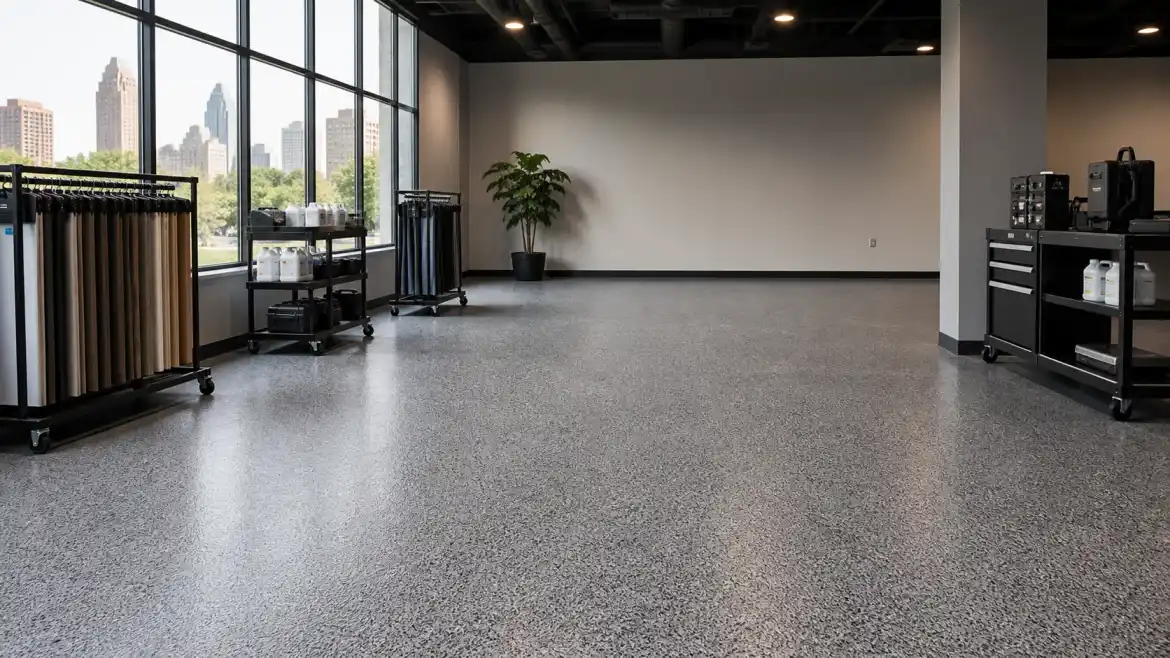
Finish Texture and Slip Resistance
Gloss level and traction profile can be adjusted for customer-facing areas, employee walkways, and spaces that see water tracked in during Atlanta storms.
Commercial epoxy flooring is a layered coating system applied over properly prepared concrete. For offices, retail backrooms, shops, showrooms, and light industrial areas, the goal is a floor that resists dusting, wipes down cleanly, and presents better than bare concrete.
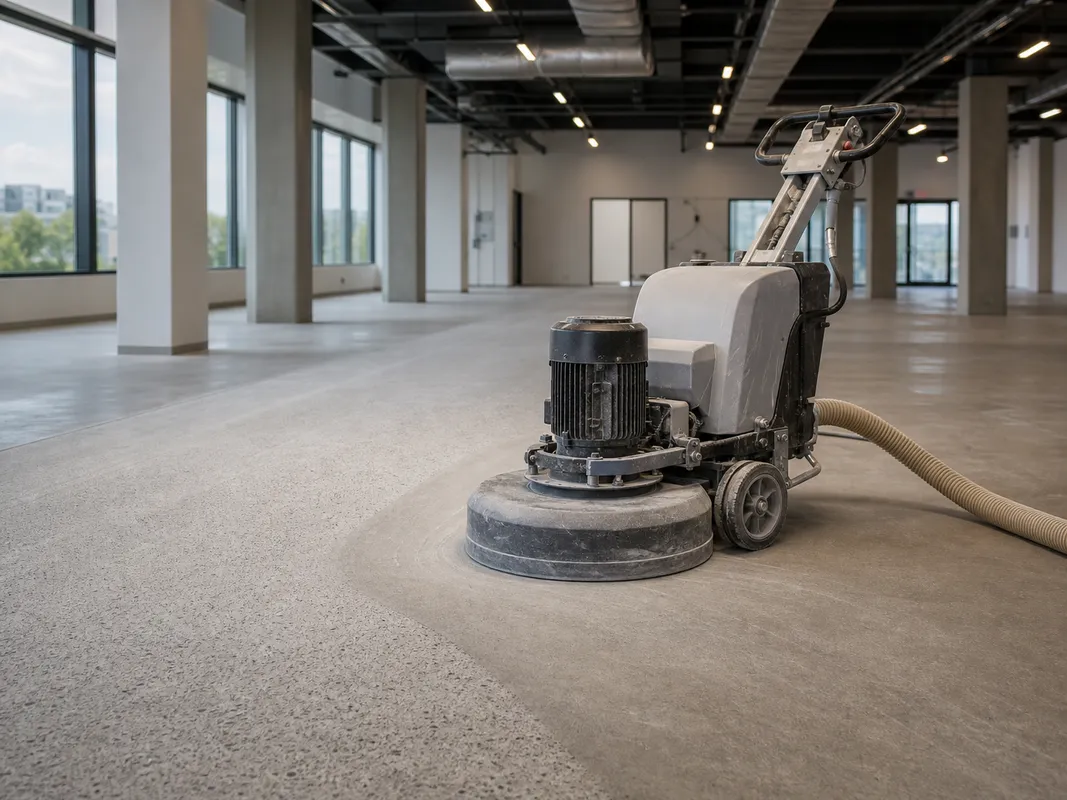
The work starts with mechanical concrete preparation so the coating can bond to the slab instead of sitting on surface contamination. Depending on the space, Garage Glow may use a primer or base coat, decorative broadcast, and protective topcoat selected for foot traffic, rolling loads, cleaning routines, and downtime limits.
A showroom does not need the same floor profile as a stockroom, and a light production room should not be treated like a front office. Garage Glow builds the specification around how the floor will be used.
Gloss level and traction profile can be adjusted for customer-facing areas, employee walkways, and spaces that see water tracked in during Atlanta storms.
Topcoat selection matters when the floor may see oils, cleaners, product spills, or mild chemicals.
A coated floor helps reduce concrete dust and makes daily cleaning more predictable, especially in storage rooms, back-of-house areas, and light industrial zones.
Colors can support branding, separate work zones, define aisles, or make trip hazards more visible. Layout markings should be confirmed during estimating.
Commercial work needs a schedule. Garage Glow discusses access, curing windows, business hours, and reopening expectations before the proposal is finalized.
A durable commercial floor is not just color rolled onto concrete. The system depends on surface prep, base coat, broadcast choice, and the protective topcoat.
The base coat bonds to the prepared slab and anchors the rest of the system. The slab condition, moisture concerns, and usage requirements guide product selection.
Flake, quartz, or traction media can be broadcast into the wet coating to add texture, visual consistency, and wear support. The broadcast level is adjusted for the environment.
The topcoat handles the daily contact: shoes, carts, displays, cleaning products, and rolling equipment. Commercial pages require honest warranty language, so warranty details are confirmed with each estimate.
Solid-color systems work well for utility spaces. Flake systems hide dirt and minor wear. Quartz systems may be considered when extra texture and durability are needed.
A coated floor gives customer-facing spaces a finished look while making dust and daily dirt easier to manage. Texture can be kept comfortable underfoot while still improving traction.
Copy rooms, break rooms, utility areas, and corridors benefit from cleanable coatings that handle rolling chairs, carts, and routine janitorial work.
Inventory spaces need floors that do not shed concrete dust onto products. A commercial coating creates a more controlled surface for shelving, carts, and pallet movement.
Small production rooms, assembly areas, and shop spaces may need stronger topcoats, added texture, and chemical-resistance planning.
Where water and cleaning chemicals are part of the routine, cove/base details or vertical transitions may be relevant.
| Factor | Commercial Epoxy | Bare Concrete | Basic Paint/Sealer |
|---|---|---|---|
| Dust control | Strong when properly bonded | Poor | Limited |
| Cleanability | High | Moderate to poor | Moderate |
| Wear resistance | System-dependent | Surface wears and stains | Often short-term |
| Appearance | Custom colors and finishes | Unfinished | Basic |
Commercial epoxy costs more than paint because the prep and layered system are different. The payoff is a floor built for actual business use, not a temporary cosmetic coat.
Commercial epoxy is designed to make maintenance simpler, but it still needs the right cleaning routine and prompt attention to damage.
Sweep or dust-mop grit before it acts like sandpaper. Use neutral cleaners and soft scrub pads unless the coating manufacturer recommends otherwise.
Clean chemical, oil, and dye spills quickly. Even resistant topcoats have limits, so facility-specific exposures should be reviewed before installation.
High-traffic lanes, chair areas, and cart paths should be inspected periodically. Early touch-up planning can prevent a small wear spot from becoming a larger repair.
Water tracked in from loading doors and entries should not sit for long periods. Walk-off mats and defined cleaning procedures help protect the finish.
If traction requirements change after occupancy, the floor can be evaluated for added grip or modified cleaning procedures.
Commercial floors fail early when prep is rushed or the coating does not match the use. Garage Glow keeps the conversation practical: what the slab is like, how the business operates, and what downtime is available.
Mechanical surface prep is part of the plan, not an upsell. Proper profiling helps the coating bond and reduces the risk of peeling caused by weak surface concrete or contamination.
Garage Glow uses materials selected for coating performance, not the cheapest kit on the shelf. Product and warranty details are reviewed with each estimate.
Mauricio Blanco owns Garage Glow and is accountable for how the project is scoped, communicated, and delivered. That matters for a new Atlanta business building its reputation one job at a time.
Garage Glow is fully insured and works with a 2-minute lead response standard. Scheduling, access, and reopening expectations are discussed before work starts.
Lifespan depends on traffic, prep quality, coating system, cleaning chemicals, and rolling loads. A light-use showroom will not wear the same way as a busy stockroom. Garage Glow confirms the intended use during estimating so the system and warranty language match the space.
Many commercial projects can be scheduled in phases, after hours, or around lower-traffic windows, but timing depends on square footage and cure requirements. Garage Glow will discuss access, ventilation, and reopening expectations before pricing the job.
It can be if the wrong finish is used in a wet or high-traffic area. Texture can be added through flake, quartz, or traction media. The right profile depends on cleaning routines, footwear, water exposure, and facility safety expectations.
A properly bonded coating can greatly reduce concrete dust by sealing the slab surface. If the concrete is weak, contaminated, or moisture-affected, those conditions need to be addressed before coating. Surface preparation is the first step.
Color planning and layout marking can be discussed during the estimate. Solid colors, flake blends, zoning, and safety striping may be possible depending on the system.
Warranty terms vary by environment, coating system, and use. Some Garage Glow systems may include a 15-year warranty where applicable, but commercial and industrial conditions need project-specific confirmation. Warranty details are confirmed with each estimate.
© 2026 Garage Glow LLC. All rights reserved. | Premium Concrete Coatings in Atlanta, GA